
Introduction
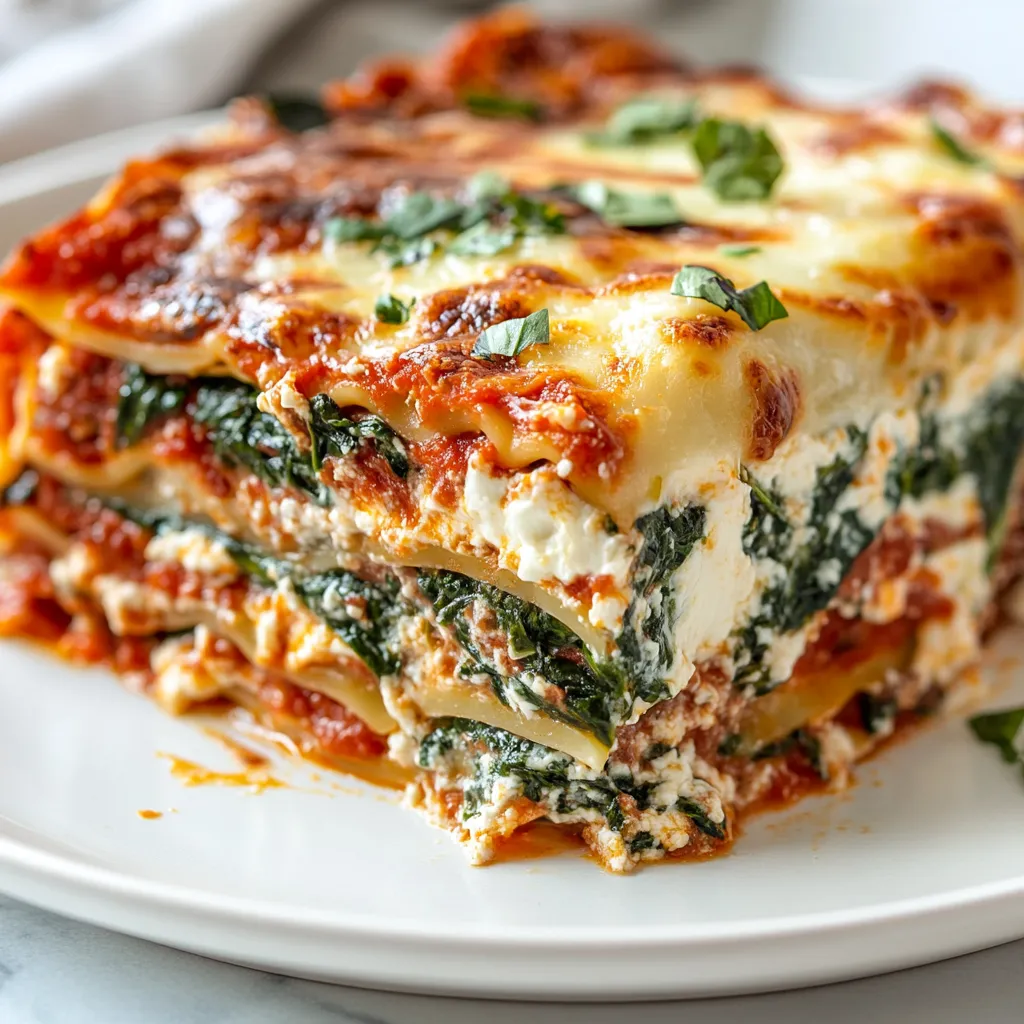
Spinach and ricotta lasagna is a classic Italian dish that combines layers of hearty pasta, vibrant greens, and creamy cheeses into a universally beloved comfort food. This dish not only satisfies the palate but also brings a sense of warmth and nostalgia, making it an ideal choice for family gatherings and cozy weeknight dinners. The combination of fresh spinach and ricotta cheese makes this lasagna a rich, flavorful option that can be prepared easily at home.
The importance of comfort food in home cooking cannot be overstated; it connects us to our loved ones and traditions, often evoking memories of shared meals and laughter. This spinach and ricotta lasagna embodies that spirit, featuring a satisfying blend of flavors and textures that everyone can enjoy. Moreover, incorporating spinach into your meals not only elevates the taste but also adds a nutritional punch, offering vitamins and minerals that contribute to a balanced diet.
With its cheesy layers and herby marinara sauce, this lasagna is a delightful dish that is perfect for various occasions. Whether you’re hosting a family dinner, feeding a group of friends, or simply treating yourself to some homemade goodness, spinach and ricotta lasagna is a fantastic choice that pleases the crowd.
Recipe Overview
– Total Time: 1 hour
– Prep Time: 20 minutes
– Cooking Time: 40 minutes
– Yield/Servings: 6-8 servings
– Difficulty: Not specified in the recipe
Ingredients
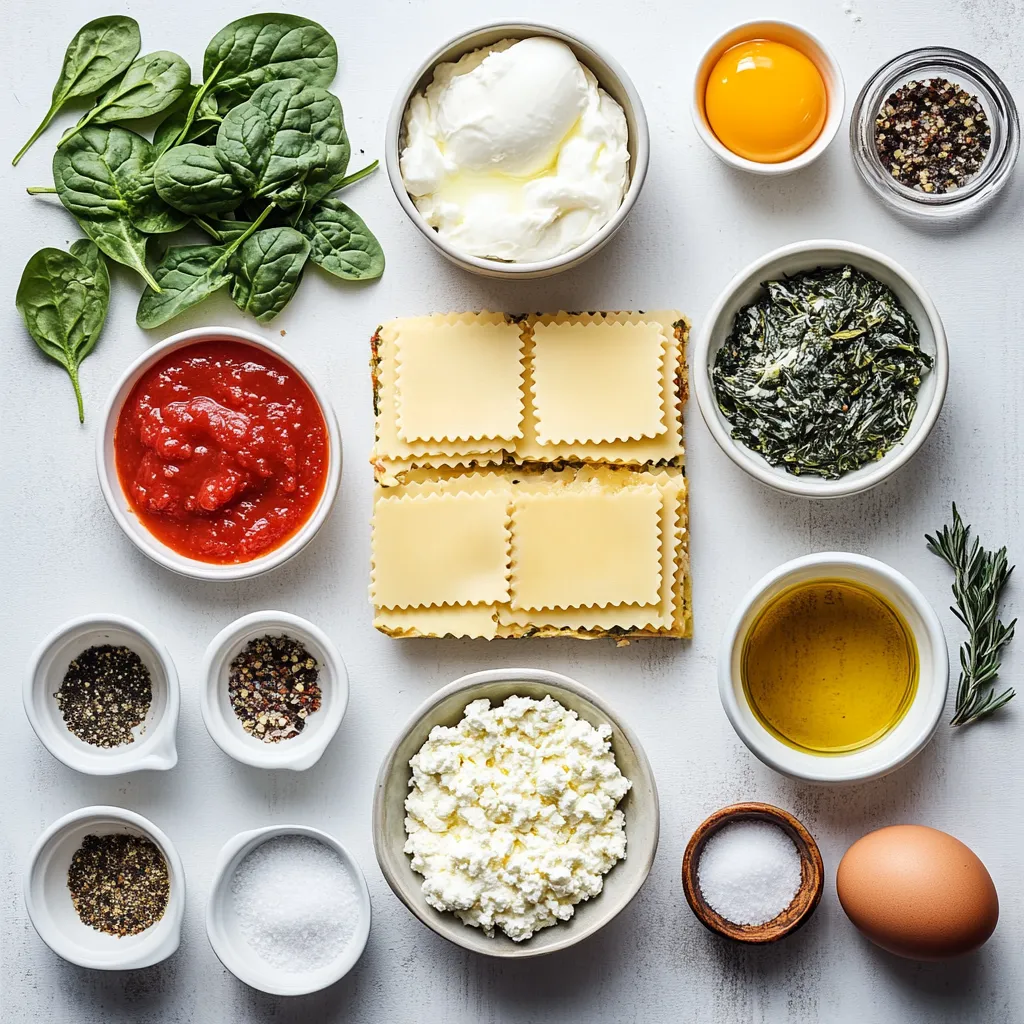
– 9 lasagna noodles
– 2 cups fresh spinach, finely chopped
– 15 oz ricotta cheese
– 1 ½ cups shredded mozzarella cheese
– 1 cup grated Parmesan cheese
– 1 large egg
– 2 cups marinara sauce
– 1 teaspoon garlic powder
– 1 teaspoon dried Italian herbs (a blend of oregano, basil, and thyme)
– Salt and freshly ground black pepper to taste
– Olive oil for greasing the baking dish
Instructions
1. Preheat the Oven: Begin by preheating your oven to 375°F (190°C) to ensure it is hot and ready for baking.
2. Cook the Lasagna Noodles: In a large pot of boiling salted water, cook the lasagna noodles according to the package instructions until they are al dente. Once cooked, drain the noodles and set them aside on a clean surface to cool slightly.
3. Prepare the Ricotta Mixture: In a mixing bowl, thoroughly combine the ricotta cheese, finely chopped spinach, egg, garlic powder, dried Italian herbs, and a pinch of salt and pepper. Stir until all ingredients are well blended and the mixture is creamy.
**Assemble the Lasagna:**
– Start by spreading a thin layer of marinara sauce evenly across the bottom of a greased 9×13 inch baking dish.
– Lay three lasagna noodles over the sauce, ensuring they are aligned.
– Evenly spread half of the ricotta mixture over the noodles, followed by a third of the shredded mozzarella cheese.
– Pour another layer of marinara sauce over this, and repeat the layering process: noodles, ricotta mixture, mozzarella, and marinara sauce.
– For the final layer, place the last three noodles on top, cover with the remaining marinara sauce, and generously sprinkle the remaining mozzarella and Parmesan cheese over the top.
5. Bake the Lasagna: Cover the baking dish tightly with aluminum foil and place it in the preheated oven. Bake for 25 minutes, then carefully remove the foil and continue baking for an additional 15 minutes, or until the cheese is bubbling and golden brown.
6. Cool and Serve: After baking, allow the lasagna to cool for about 10 minutes before slicing. This resting period helps the layers to set, making it easier to serve.
7. Enjoy!: Serve the lasagna hot, garnished with fresh basil or parsley for an added touch of color and flavor.
Prepping the Oven
Before diving into the preparation of your delicious spinach and ricotta lasagna, it’s essential to get your oven ready. Preheating your oven to 375°F (190°C) is the first critical step in ensuring that the lasagna cooks evenly and thoroughly. When the oven reaches the desired temperature, the cooking process will begin instantly, locking in flavors and ensuring a perfectly baked dish.
During the preheating phase, it’s advisable to take safety precautions. Always use oven mitts when handling the oven door and rack, as they can become extremely hot. Additionally, ensure your oven is clean and free of any previous spills, as these can create smoke and unwanted odors while cooking. Taking these small steps can make your cooking experience smoother and more enjoyable.
Cooking the Lasagna Noodles
Cooking the lasagna noodles is a pivotal part of the lasagna-making process and requires your attention for optimal results. Begin by bringing a large pot of water to a rolling boil, adding a generous amount of salt—this is crucial for flavor. Once the water is boiling, gently place the lasagna noodles into the pot and follow the package instructions for cooking time, typically until they are al dente, which means they should still have a slight firmness when bitten.
As the noodles cook, keep an eye on them to ensure they don’t become overly soft, which can lead to them breaking apart during assembly. When they are ready, drain the noodles in a colander and lay them out flat on a clean surface to cool slightly. To prevent the noodles from sticking together, you can lightly drizzle them with a bit of olive oil. This simple tip ensures that your layers stay intact when it’s time to assemble the lasagna, leading to a beautiful final presentation.
Preparing the Ricotta Mixture
The ricotta mixture is where the magic happens in this spinach and ricotta lasagna. Combining the creamy ricotta cheese with finely chopped spinach not only enhances the flavor but also adds essential nutrients to the dish. Begin by measuring out the ricotta cheese and placing it in a spacious mixing bowl. The key to a smooth and well-integrated filling is to mix all the components thoroughly.
Next, add the finely chopped spinach to the ricotta. The freshness of the spinach is essential, as it adds a slight earthiness that balances the richness of the cheeses. Incorporating a large egg into the mixture serves as a binding agent, helping to keep the filling cohesive as it bakes. Season the mixture with garlic powder and a blend of dried Italian herbs, which infuse the filling with aromatic notes of oregano, basil, and thyme. Lastly, add a pinch of salt and freshly cracked black pepper to taste; this ensures your filling is flavorful throughout. Stir everything together until it becomes creamy and well combined, and your ricotta mixture is ready for assembly into layers of lasagna bliss.
Mixing Techniques for a Creamy Texture
Achieving a creamy texture in the ricotta mixture is vital for the overall satisfaction of your lasagna. Begin by using room temperature ricotta, which blends more smoothly with the other ingredients. A mixing technique to consider is folding. This method involves gently incorporating the spinach, egg, garlic powder, and herbs into the ricotta, maintaining a light and airy texture. Avoid overmixing as this can create a denser filling. Additionally, if desired, you can use a food processor for a very smooth mixture—this is particularly helpful if you or your guests prefer a silkier texture, but be cautious not to blend too much.
The Role of Each Ingredient in Flavor and Texture
Each ingredient in this spinach and ricotta lasagna plays a critical role. Ricotta cheese provides creaminess and a mild, slightly sweet flavor. Spinach adds a subtle earthiness and a fresh, vibrant color that contrasts beautifully against the cheese and sauce. The large egg acts as a binder, helping the ricotta mixture hold together during baking. Garlic powder gives a hint of aroma without the pungency of fresh garlic, while Italian herbs enhance the overall Italian flavor profile, infusing the layers with complexity. The marinara sauce contributes acidity and depth, balancing the richness of the cheeses, while mozzarella and Parmesan add gooeyness and a savory finish when baked.
Tips for Proper Seasoning and Adjustments
Proper seasoning is essential to elevate the flavors of your lasagna. Taste the ricotta mixture before assembling the lasagna; adjust the salt and pepper according to your preference. For an extra kick, consider adding crushed red pepper flakes for warmth or additional garlic powder for more flavor. Always remember that marinara sauce can vary in saltiness, so taste the sauce as well and adjust against that base. If you’re making a larger batch, or simply need a bit more of your ricotta mixture, add more herbs or cheese to maintain balance without overpowering the existing flavors.
Making the Mixture Ahead of Time
If planning to prepare your lasagna in advance, the ricotta filling can be made a day ahead of time. Just store it in an airtight container in the refrigerator to keep it fresh. When ready to assemble, simply stir the mixture briefly to redistribute the ingredients. This not only saves preparation time but also allows the flavors to meld together for a richer taste.
Assembling the Lasagna
Layering Technique for Optimal Flavor and Texture
Layering your lasagna correctly significantly impacts both flavor and texture, ensuring that every bite is balanced. Start with the marinara sauce on the bottom, which prevents the noodles from sticking to the dish and provides a moisture source during cooking. Lay three noodles, ensuring they are not overlapping. Alternate layers of the ricotta mixture, mozzarella, and marinara sauce for even distribution. Repeat until you run out of ingredients, finishing with noodles, marinara sauce, and the rest of the cheeses on top. This method guarantees that the flavor permeates through each layer.
Importance of Covering the Bottom with Sauce
Covering the bottom of the baking dish with marinara sauce is critical. Not only does it create a lovely flavor foundation, but it also helps in preventing sticking, ensuring the first layer of noodles cooks properly while maintaining moisture during the baking process. This simple step can prevent a dry lasagna, ensuring each layer is succulent.
Order of Ingredients for Even Distribution
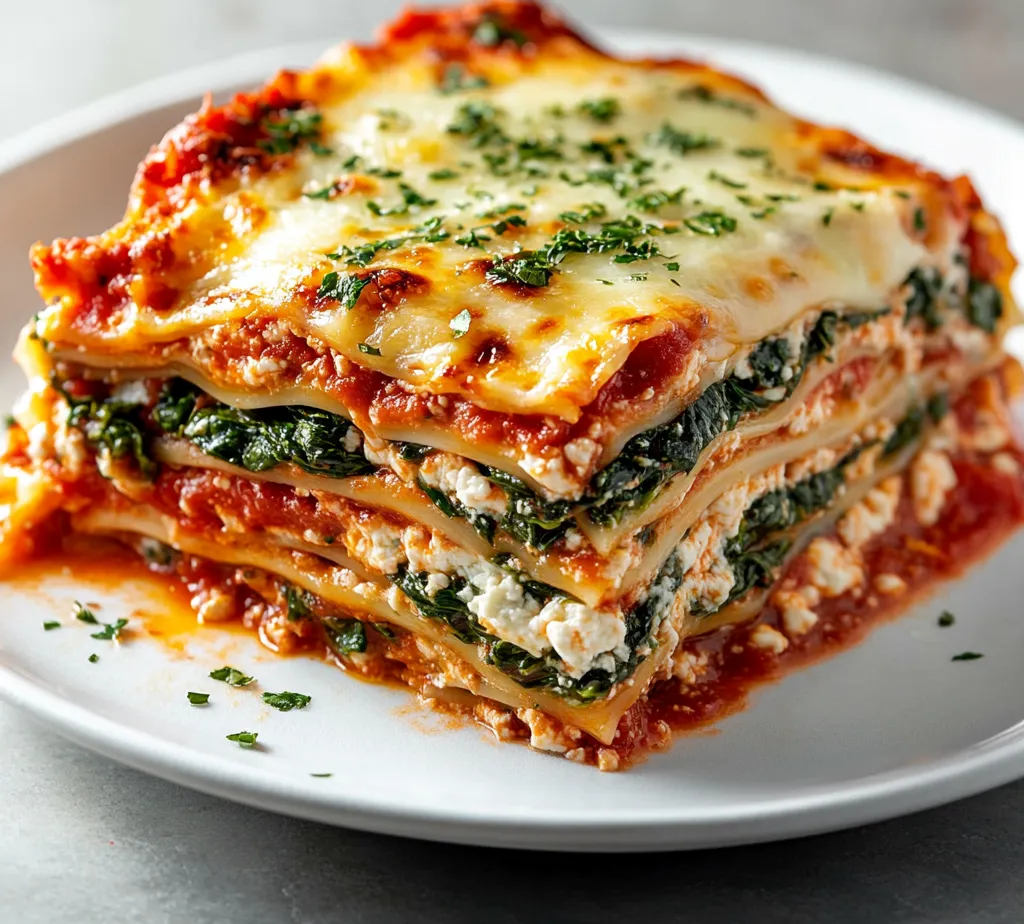
For an even distribution of flavors and textures, be mindful of the layering order: sauce, noodles, ricotta mixture, mozzarella, repeat. Each layer should be distinct yet meld seamlessly upon baking, creating a beautiful slice when served. Ending with sauce and cheese on top offers an attractive and satisfying presentation once it has been baked.
Guidance on Portion Sizes for Layers
As a general rule, you can expect to get about two generous cups of ricotta mixture across the layers. Utilizing this can help you determine how much to spread across each layer without running out too soon. Aim for about 1 cup of ricotta per layer, supplemented by marinara and mozzarella, ensuring you balance your servings for a delightful flavor experience right through each slice.
Visual Appeal of the Final Layer
The final layer is your opportunity to impress visually and texturally. When layering the top, generously sprinkle a blend of shredded mozzarella and grated Parmesan to create a golden crust. The appeal of a lasagna is often in its beautiful, bubbly upper layer, which should be inviting and appetizing. A sprinkle of freshly cracked black pepper or freshly chopped parsley on top also enhances its visual allure.
Baking the Lasagna
Covering the Baking Dish: Importance of Foil
Covering your baking dish with aluminum foil is essential for the first half of the baking period to trap steam, which in turn keeps your lasagna moist. Removing the foil halfway allows the cheese to bubble and brown beautifully, transforming it to a golden, crunchy topping, ensuring a delightful contrast to the creamy interior.
Timing and Temperature Management During Baking
Baking at a consistent temperature of 375°F (190°C) ensures the lasagna cooks evenly. Following the specified time frame of 25 minutes covered and 15 minutes uncovered will help achieve the desired doneness. It’s crucial to note that oven performance can vary, so monitor the lasagna closely towards the end of the cooking time.
Signs to Look for When the Lasagna is Ready
Look out for the visual cues: the cheese should be melted, bubbling at the edges, and turning a rich golden color. Ensure the sauce is seen to be bubbling slightly at the edges, signaling that the dish has been heated through to the center. If needed, an internal temperature check of around 160°F (71°C) can confirm doneness.
Tips for Achieving a Golden Brown Cheese Layer
For that coveted golden brown top, you can consider broiling the lasagna for the last couple of minutes of baking. Monitor this closely to avoid burning, as broilers can be unpredictable. When broiling, keep the baking dish about 6 to 8 inches away from the heat source for the best result.
Cooling and Serving
Importance of Cooling Before Slicing
Allow the lasagna to cool for about 10 minutes post-baking to help the layers set. This brief resting time allows for easier slicing and serving, preventing all the ingredients from sliding apart and ensuring each serving maintains its form.
Techniques for Cutting the Lasagna Cleanly
Using a sharp knife is essential for a clean cut. A good tip is to dip the knife into hot water, then wipe it before slicing; this technique will help to create clean edges that don’t mash the layers together.
Serving Suggestions for Optimal Presentation
For the best presentation, consider serving lasagna in square or rectangular portions, each on a stylish plate. Drizzling additional marinara sauce around the edge can add a pop of color, combined with fresh basil or parsley as a garnish for an added touch of freshness.
Optional Presentation Tips
Ideas for Garnishing Dishes
Garnishing can elevate your dish significantly. A sprinkle of freshly chopped basil or parsley not only enhances the visual appeal but also adds a fresh herby aroma that complements the flavors beautifully.
Importance of Visual Appeal in Food Presentation
Engaging the senses begins with the sight of your dish. A well-presented lasagna, glowing with rich colors and textures, makes the meal inviting. Utilizing layers to showcase different ingredients along with height, can create a more dynamic and appealing plate.
Utilizing Fresh Herbs and Sauces for Decoration
Consider using vibrant herbs and whispered sauces for decoration; a drizzle of balsamic reduction can add a touch of sophistication, while fresh microgreens or edible flowers can add an artistic flair that impresses your guests.
Flavor Variations and Customizations
Suggestions for Adding Additional Vegetables
To add color, texture, and nutritional value, consider layering in vegetables such as zucchini, mushrooms, or bell peppers. These should be cooked and cooled before layering to remove excess moisture that can affect the consistency of the lasagna.
Alternative Cheeses to Experiment With
If you enjoy experimenting with flavors, consider incorporating other cheeses like goat cheese or feta alongside the ricotta for an added tang. Mixing in a bit of sharp cheddar can also create an unexpected twist on traditional flavor profiles.
Ideas for Ramps and Twists on Traditional Flavors (e.g., Meat Sauce)
For those wanting a heartier dish, you may consider utilizing a meat sauce layer in place of or in addition to marinara. Ground beef or turkey can be sautéed with garlic and onion, then layered among the ricotta mixture for a twist that appeals to both texture and flavor lovers.
Nutritional Analysis
Breakdowns of Calories, Protein, and Dietary Fiber
While specific nutritional values can fluctuate based on portion sizes and ingredient brands, a typical serving can contain approximately 350-550 calories, 25g of protein, and 2-5g of dietary fiber. This lasagna can be made more nutrient-dense by focusing on the quality of the cheeses and proportioning the spinach up or down.
Health Benefits of Spinach and Rich Cheese Content
Spinach is high in vitamins A, C, K, and folate while being low in calories, providing essential nutrients that promote overall health. While cheeses are rich in calcium and protein, balancing their intake by including spinach can create a more rounded meal profile.
Suggestions for a Balanced Meal
To create a balanced meal alongside the lasagna, consider serving it alongside a simple arugula salad with a light vinaigrette. This contrast provides freshness to the richness of the lasagna and can cut through the creaminess, creating a complete dining experience.
Conclusion
Spinach and Ricotta Lasagna brings together a satisfying blend of creamy, cheesy layers enriched with fresh spinach. With preparation and baking completed in just over an hour, it offers a comforting dish that is both flavorful and visually appealing. Ideal for family gatherings or special occasions, it promises both rich taste and a delightful presentation.
Spinach and Ricotta Lasagna Bliss
Ingredients
- 9 pieces lasagna noodles
- 2 cups fresh spinach finely chopped
- 15 oz ricotta cheese
- 1 ½ cups shredded mozzarella cheese
- 1 cup grated Parmesan cheese
- 1 large egg
- 2 cups marinara sauce
- 1 teaspoon garlic powder
- 1 teaspoon dried Italian herbs
- to taste salt
- to taste freshly ground black pepper
- for greasing olive oil
Instructions
- Preheat your oven to 375°F (190°C).
- Cook the lasagna noodles in boiling salted water until al dente, then drain and cool.
- In a bowl, mix ricotta cheese, spinach, egg, garlic powder, Italian herbs, salt, and pepper until creamy.
- Spread a layer of marinara sauce in a greased baking dish, then layer three noodles on top.
- Spread half of the ricotta mixture over the noodles, add a third of the mozzarella, and pour more marinara sauce.
- Repeat the layering process, finishing with three noodles, marinara sauce, and the remaining cheeses on top.
- Cover with foil and bake for 25 minutes, then uncover and bake for another 15 minutes until golden.
- Let cool for 10 minutes before slicing and serving.